







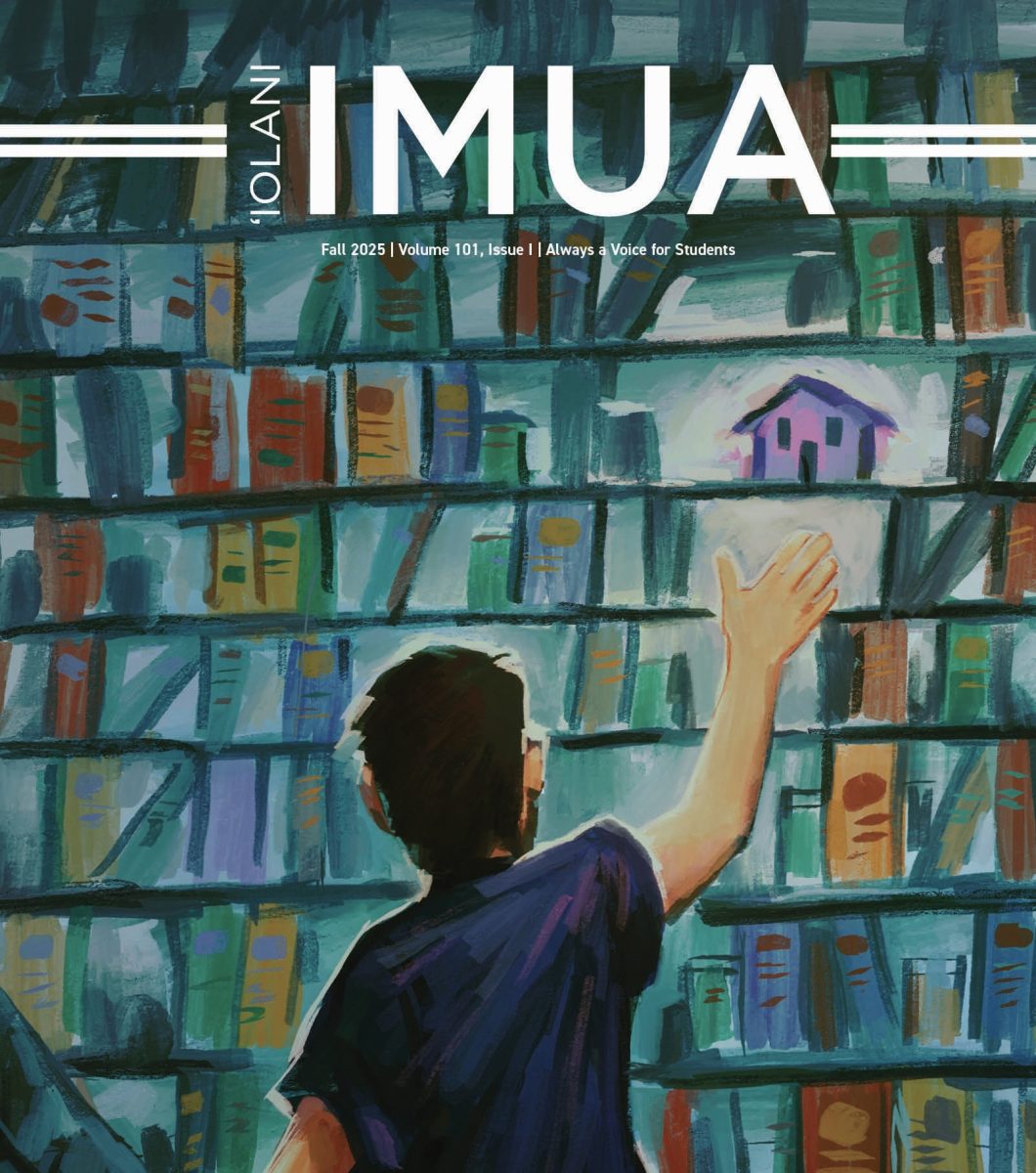



In Hawai‘i, asking “What school do you go to?” is not a simple, logistical question. Often, it is a way to ask someone about their social, intellectual and economic status all at once.
From parents asking “What school you went?” to students’ conversations revolving around the subject, a school’s name can shape a first impression before anything else is known. The answer becomes an assumption of whether one is smart or not, wealthy and privileged or not.
These perceptions reflect a common belief that private schools offer stronger educational opportunities while public schools are seen as underperforming. In fact, public schools have clear strengths such as diversity and free education. The comparisons overlook deep structural factors, like differences in early childhood access, household stability, funding and informational barriers. In real life, these factors shape student opportunities long before measuring academic outcomes. Educators argue that the divide between public and private education is less about intelligence, and more about unequal access to resources.
When Schools Become a Measure of Intelligence
Misconceptions of public and private education shape how students talk about schools and evaluate one another without direct experience.
“In Hawai‘i, typically, public schools are seen as lesser than private schools,” Mrs. Allison Blankenship ’02, Director of External Education Programs, said. She mentioned that this perception is shaped through structural inequalities, rather than differences in students’ potential.
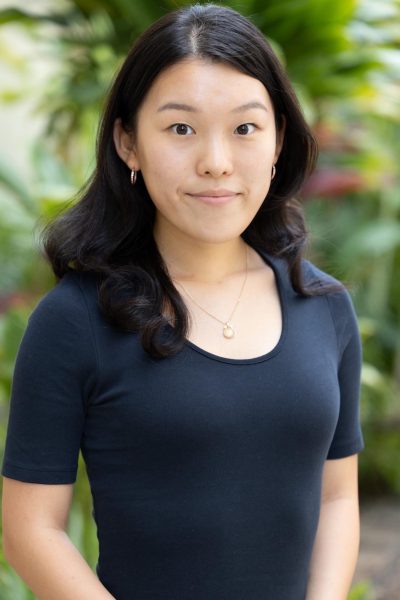
These assumptions can turn a school’s name into an easy measurement of intelligence and wealth. Maya G. ’27, a student who attended public school prior to ‘Iolani, described the stereotypes she heard growing up: “‘Iolani in particular, it was [known as] the nerdy school, [where] all the really smart people go — and they’re probably rich.”
However, these perceptions don’t only shape first impressions, but they also play a role in how students see themselves and interact across schools. “I felt a lot of imposter syndrome,” Maya said, after mentioning her transition to ‘Iolani. “I used to be the ‘smart one,’ and suddenly I felt average.” Going to a school that is perceived as prestigious led to a student feeling defined not by their abilities, but by the school they attend.
The Danger of Comparing Outcomes Without Context
At first glance, the differences in student outcomes between schools seem like reinforcing these perceptions. For example, on Niche.com, ‘Iolani School reports a 98% college enrollment rate, an average SAT score of 1380, and a 100% graduation rate. In contrast, Kaimukī High School, a public school nearby ‘Iolani, reports an average SAT score of 1050 and an 82% graduation rate. The numbers suggest the presence of differences in academic performance, yet do not explain why these differences exist.
One of the most clear structural differences comes from funding. While educating one student at ‘Iolani costs around $47,000 per year, public schools in Hawai‘i receive $20,600 per pupil funding, primarily through state funding. The range of resources available differs dramatically. Mrs. Melanie Pfingsten, Interim Head of School, said, “Is a private school better? We’re not talking about people’s character. We’re not talking about the quality of teachers. We’re talking about what resources we can offer—how many teams we can have, what facilities we can build, what teachers we can attract because we pay them.”
Mrs. Blankenship similarly described the comparison between private and public schools in Hawai‘i as “not apples to apples.” There is a much broader context that must be considered even before comparing school names.
Educational researchers emphasize that outcomes are not only shaped by what happens inside the classrooms, but also from differences in opportunities outside. A 2024 systematic review by Harvard researcher Dr. Divyangana Rakesh suggests that “student achievement … [is] supported by multiple factors, such as preschool attendance, family environment, parental support… [and] broader social context,” not school type alone.
This is why the gap should be phrased as an opportunity gap, not an achievement gap. The comparison between outcomes, such as test scores and college acceptance rates is unfair, while an opportunity gap shifts the attention to the unequal access to resources that lead to those outcomes in the first place. The real divider between students is not simply how they perform, but their access to opportunities along the way.
Opportunity Begins Long Before High School
Differences in opportunities do not begin in high school classrooms, but often, years earlier in early childhood education, access to information and household stability.
“I would guess that 100% of our kids who come into ‘Iolani have had preschool,” Mrs. Blankenship said. “That sets you off on a totally different track… just that one factor alone.” Early childhood education such as preschooling helps students develop foundational academic and social skills. Due to its cost, attending preschool can be difficult to access for some households. Thus, students without access to preschool may begin their educational journey from a totally different starting point behind, creating gaps that widen over time.
Access to information also plays an important role. Mr. Kirk Uejio ’98, KA‘I Director of Middle and High School Program, mentioned that “even knowing the calendar and knowing that you have to register for the SSAT — that [creates] barriers to access.”
Information also creates boundaries in everyday communication. Students’ environments, including peers, shape their perceptions of a possible future. Exposure to a broader angle, shows more possibilities that can be in front. Being unaware of the existence of some jobs automatically erases possibilities from their list.
Family responsibilities also affect academic focus. Responsibilities students hold besides ‘being a student’ such as taking care of siblings can affect their access to a wider variety of opportunities due to time constraints. “…[E]ven if there are opportunities, they have to be home to watch their siblings because of how the family operates.” Ms. Janelle Higa, Academic Counselor at S.W. King Intermediate School, explains some of the situations that her students face this way. “It is really hard to focus on school and academics when you have basic needs that are not met.”
The factors that some may take for granted are independent from a student’s intellectual ability, but still strongly shape the outcomes.
Resources Shape Opportunities Inside Schools
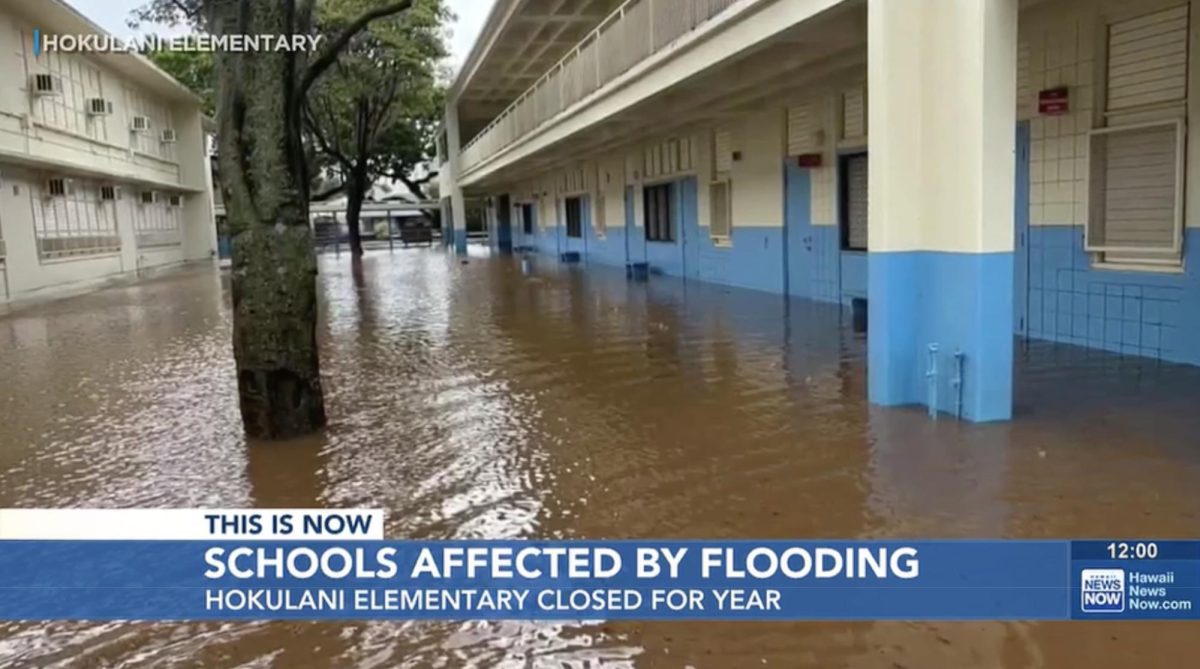
Due to the shortage of access to educational resources, schools vary in their student support systems.
“At [King Intermediate], it’s about 250 to 300 students per counselor… right now we have 280,” Ms. Higa said. Compared to ‘Iolani School, where each grade level from 9-12 carries around 300 students each, has two counselors alongside eight college counselors, the number of students that each counselor must take care of is significantly larger in public schools. As a result, counselors in public schools often prioritize urgent issues rather than solely focusing on academic planning. “What ends up happening is you do a… more reactive kind of thing… It’s a lot of putting out fires,” Ms. Higa added, while private schools, with lower student-to-counselor ratios and additional academic resources, may be able to provide more individualized support.
However, educators also emphasize that this difference in resource allocation does not correlate with differences in student ability. “I truly think it’s not that everybody at ‘Iolani is just naturally smarter,” Maya says, “It’s really the environment and the culture that we have.” Ms. Higa agrees: “If [students] are capable and if they have the right access to resources, they can really go far in public schools.”
Strength Exists on Both Sides
While private schools offer academically challenging and engaging curriculums associated with diverse extracurricular activities, public schools also offer strengths that private schools can learn from, especially through its diverse classrooms. Public school classrooms tend to be both socioeconomically and culturally diverse.
Public school teachers, who develop expertise in supporting a wider range of learners, “might know their content very well…and they are trained to teach, not just content,” Ms. Higa explains. “Learning how to reach different types of students [of] different backgrounds [and] different abilities — that’s a skill.” Mr. Uejio said.
Notable programs not only exist in private education, but also in public education. Some public schools also provide students with early access to college curriculums. Students at Castle High School take college courses through Windward Community College. Instead of taking AP courses, a professor comes in to teach, extending students’ academic pathways beyond high school offerings. Mrs. Pfingsten said that by getting exposed to diverse people with various experiences and perspectives, students learn that “the world is a wide place, and it is filled with all kinds of people, with all kinds of ways of knowing… [who] got experiences that [some] never have.”
Shared Responsibility in Closing Opportunity Gaps
Rather than blaming individuals or schools for comparing themselves, educators argue that reducing gaps of opportunity require shared responsibility inside communities.
Private schools have been participating in outreach programs such as ‘Iolani School’s KA‘I Programs or Punahou School’s PUEO program, which connects students across schools. By being “super selective, …cream on top and [taking] the best of the best and [putting] students [in private schools],” Mrs. Blankenship mentioned that private schools themselves increase disparity among systems. “[Private schools] benefit from the system, so we have some responsibility to engage with it,” Mrs. Blankenship said.
The state has also implemented the Weighted Student Formula, which allocates additional funding to public schools that include students with higher economic needs, aiming to address disparities. However, funding has not kept pace with rising costs and limited the effectiveness of the program itself. On Jan. 23, 2026, SB2897 was introduced in the senate, which recommends the search for ways to find resource parity, including lower student-to-teacher ratios and expanded specialized programming, in public schools. Ongoing efforts should not be shut down, rather be encouraged.
Taken together, the divide should be interpreted as a problem led by unequal access, not intelligence. “Always remember that you stand on the shoulders of others,” Mrs. Pfingsten said, “The privileges that you enjoy are not because you’re somehow a better person.”
As Maya said, “We are really not that different.”