












Through one of my brainless scrolling sessions, I came across a video of a woman describing what she called a “Chinese stage” of her life. The past few mornings, she said she would boil hot water with ginger slices and dates, praising how it is healthier than the standard iced latte from Starbucks. Slightly surprised and very confused, I scrolled to the next video. The next creator demonstrated how to use a gua sha tool to depuff and sculpt her face. Scroll after scroll, a similar trend appeared with Chinese rituals, routines and aesthetics framed as a lifestyle to adopt.
At first, it felt familiar. Some of these practices resembled things I had seen growing up in China, from habits passed down through generations to minor superstitious practices. As I kept watching, that familiarity began to feel incomplete and uncomfortable. What I was seeing wasn’t quite the culture as a lived experience, but something curated, simplified and repackaged for a specific targeted audience.
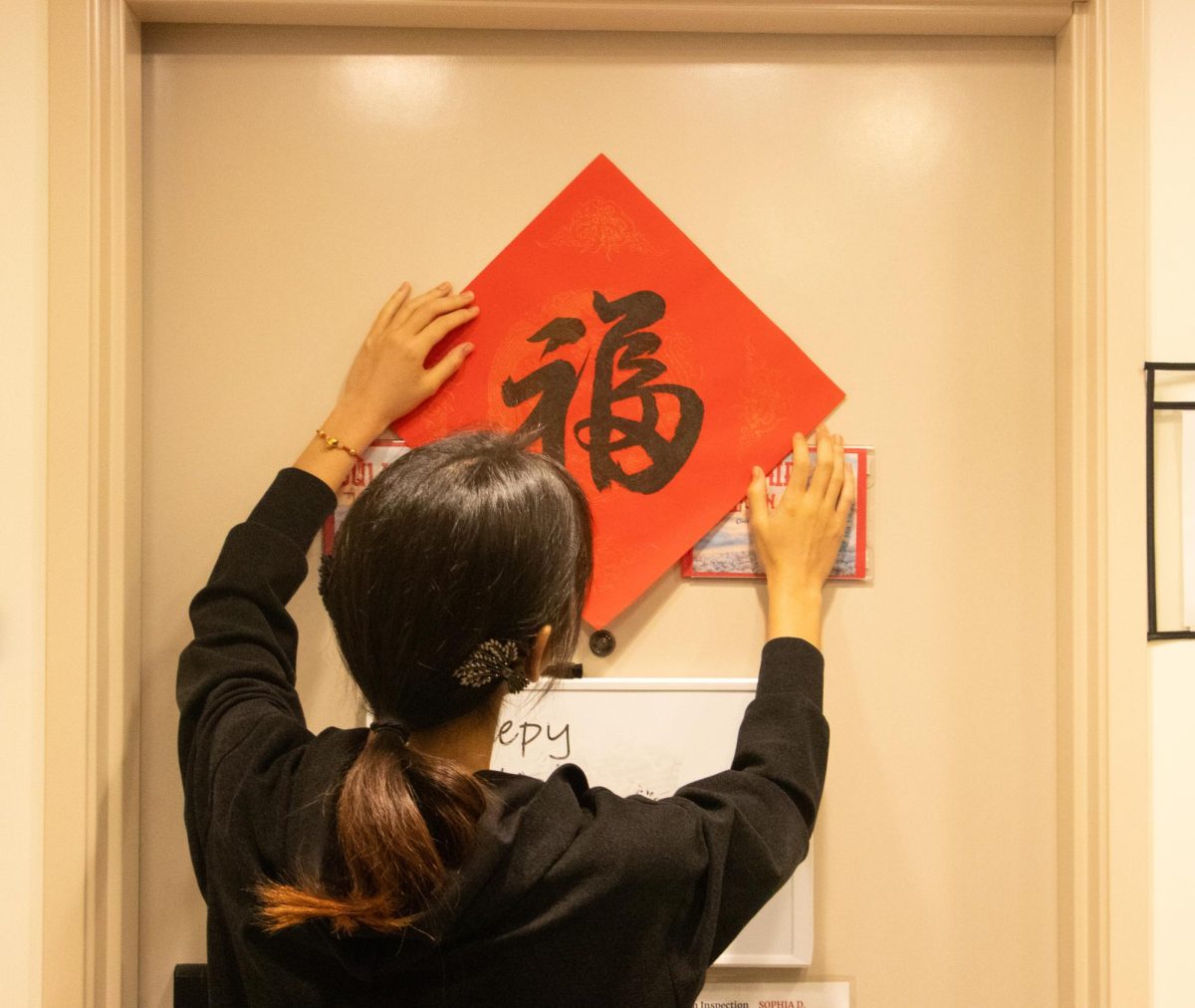
This trend, referred as “chinamaxxing,” involves social media users imitating, aestheticizing and even monetizing elements of Chinese culture. From drinking hot water in the morning, to wearing indoor slippers, to traditional medicine and skincare, “chinamaxxing” is being framed as appreciation for culture. However, this trend specifically lingers on habits that have been mocked and ridiculed throughout history. While trends showcase elements of Chinese culture that feel engaging and even praiseworthy, it ultimately fits in the puzzle of the long-standing pattern of turning culture into a spectacle. By isolating habits and behaviors from their context, the trend reduces a lived reality shaped by history and ethnic culture into something performative and consumable. The issue is not simply whether people mean well, but whether the impact reinforces the same generalization that has historically defined how Asian cultures are portrayed. In that sense, chinamaxxing is less a new phenomenon and more of a digital repetition of a perennial problem.
Selective Incorporation
While chinamaxxing gains popularity because it feels familiar, validating and even culturally appreciative, this appeal is rooted in selective and oversimplified representatives of a nation’s identity. Many of the practices shown about herbal remedies and traditional tools are real. In that sense, the trend can spark curiosity and even bring visibility to cultural traditions that have historically been dismissed.
Tata L. ’27, who spent most of his life in China, said, “My initial reaction is actually that I’m proud of what they have to ‘max’ about, especially contrasted with a few years ago. Because especially back in the pandemic, there were a lot of more negative views about China and about Chinese culture.” Moreover, as one student, Lily J. ’27, who grew up partially in China, said her initial reaction was that the content felt “relatable,” reminding her of things her grandparents would do. However, that familiarity is selective. When asked how she wishes these trends to be executed, Lily said, “I’d want people to actually do research and not just listen to whatever they see on social media before they actually retain a certain information about Asian culture in their brain.”
Despite the indifferent attitude most viewers have upon the trend, I was always left with an unsettled feeling.
As I questioned the reasoning behind my hesitancy, I came to a conclusion: visibility without context does not necessarily lead to understanding. Instead, it can reinforce misleading narratives. An example is why it is no longer culturally appropriate to dress in someone’s culture for Halloween. Cultural practices are not interchangeable trends, but shaped by history, community and lived experiences. Unless the culture can fully be portrayed, simply justifying it by bringing it into popular attention is not enough.
Cultural Impressions and Fixities
When aesthetic performance is prioritized over cultural practices, cultural trends can be reductive and dehumanizing, especially when they are stripped of meaning and purpose. As Dr. Hannah Lim who teaches Asian American Studies, Media Literacy and East Asian History courses said, the distinction between intent and impact is important. Even if creators do not intend harm, the impact can still be reductive or dehumanizing, despite the number of people harmed during the process.
After learning about the trend, Dr. Lim said, “Maybe 100 people hear a joke and 99 people just take that joke as not a big deal. But there could be one person that takes that [is hurt].” Intentions cannot justify the effect of one’s actions. Moreover, Dr. Lim says “When trends come and go, we really examine: what does that say about us? What does that say about what we find entertaining and funny? Who is it costing? Is it taking away their dignity somehow? Is it at the expense of someone’s heritage?” Imitation and even humor, despite their superficial intentions, echo a deeper and systemic pattern of defining.
This imbalance is also tied to what Dr. Lim describes as a lack of “flexibility” in identity. It made me reflect on certain choices some people may not have. Influencers can experiment with a “Chinese stage,” adopting and discarding cultural elements at their own liking and will. But for people who are tied to their ethnic heritage, identity is not optional. They remain subject to stereotyping regardless of context. The ability to both step in and out of a cultural identity is a privilege not widely available. Especially when those unassociated with the culture are the ones reinforcing our impressions of a certain people, it implies something darker about our society as a whole.
Who has free will?
Chinamaxxing is not a new phenomenon, but a digital continuation of a long historical pattern in which Asian cultures have been exoticized, commodified and reinterpreted through an external lens. This pattern can be traced back to movements such as chinoiserie, where European artists imitated Chinese aesthetics without engaging with their cultural meanings, reducing them to decorative styles rather than a lived tradition. This ties back to the blurred line between appreciation and appropriation. Appreciation requires context, understanding and respect for the people behind the practice, while appropriation often picks and chooses at what is conventionally enticing.
Dr. Lim said, “Certain forms of art, when they’re removed from the context that they’re about, and when the people behind the inspiration aren’t credited or compensated directly, I think that goes more in the line of cultural appropriation than cultural appreciation. One is more exploitative than the other. There’s like a monetary component there.”
What distinguishes chinamaxxing is not its existence, but its medium. Unlike earlier forms of representation in art or film, social media accelerates this process, transforming culture into short, repeatable and palatable content. Practices are now repackaged into algorithmic and targeted trends, shaped less by accuracy, and more by what is currently eye-catching. In digital spaces driven by virality, cultural appropriation is far easier to produce, with the final goal being attention and engagement, not nuance, complexity and history.
Compared to the anti-Chinese sentiment prevalent during Covid-19, chinamaxxing reflects a broader cycle in which Asian cultures are alternatively admired or stigmatized. Whether it is valued as aesthetic inspiration in one moment or reduced to stereotypes in another, the attitudes on Chinese culture is founded on caprice. Understanding this, I wonder who is responsible for ensuring cultural understanding? Influencers are incentivized to produce media that triggers attraction, but audiences are not powerless. As consumers of media, viewers have the free will to choose and question what they see.
Ultimately, chinamaxxing reveals less about Chinese culture itself and more about how the internet consumes culture. When cultural practices are reduced to trends, they risk becoming content first before meaning. If culture is something we can simply “max”, extract and perform, then the question is no longer what we are seeing online, but what we are losing in the process. It raises a more uncomfortable reality: in our rush and impulses to consume other cultures, we may actually be reinforcing how little we truly understand one another.