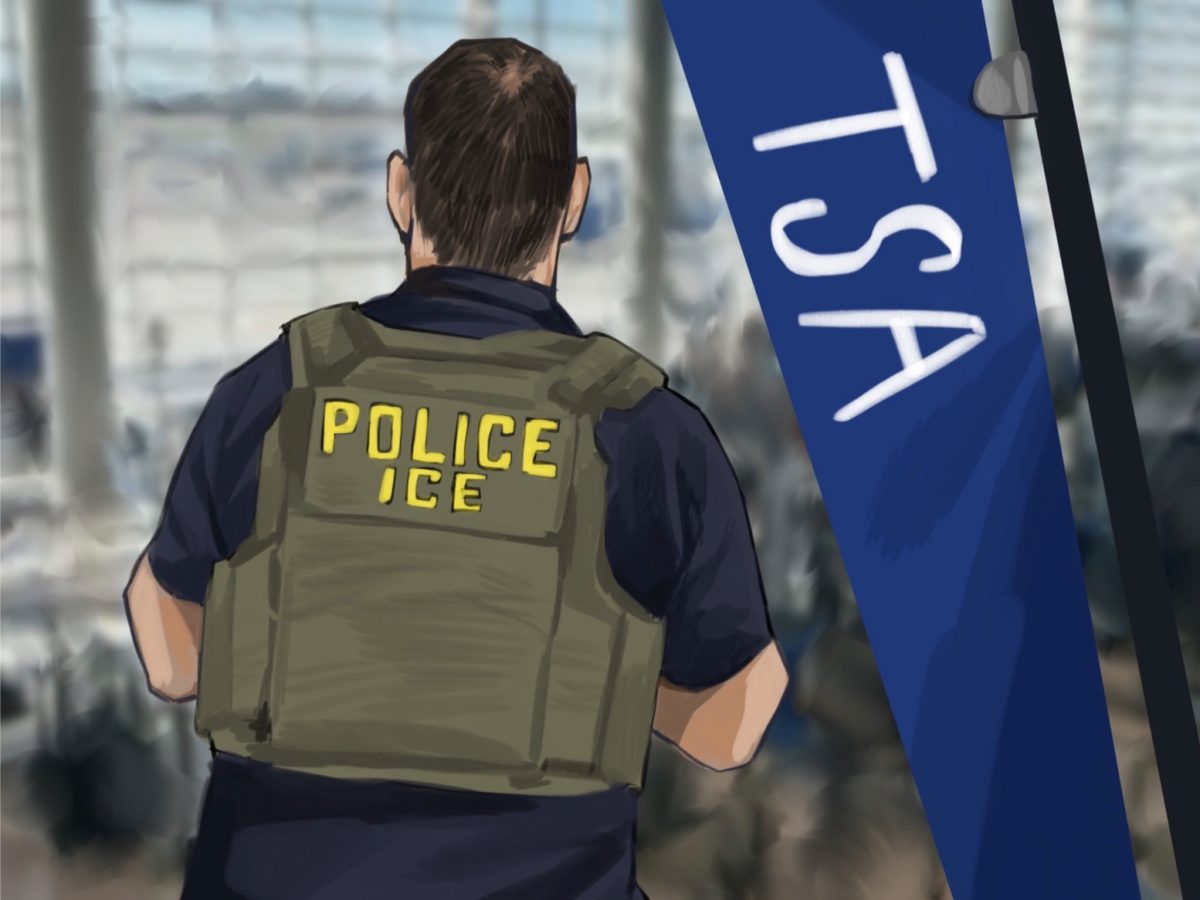



















What happens when our government cannot agree? That has been the question playing out since Feb. 14 when the Department of Homeland Security (DHS) shutdown began, leaving more than 50,000 Transportation Security Administration (TSA) workers without pay. This lapse has led to hundreds of resignations, forcing the government to order the controversial deployment of immigration agents to fill the gap. This reassignment of U.S. Immigration and Customs Enforcement (ICE) agents, who are still being paid, to airport security has sparked debate over whether ICE agents are properly trained for their new roles. In addition, since TSA is an agency ultimately meant for immigration enforcement, not aviation security, concerns have also been raised about the issue of government overreach.
Pay cuts from the DHS shutdown have affected over 20 different agencies. ICE, however, despite being under the official DHS umbrella, has still received funding, most of which comes from President Trump’s One Big Beautiful Bill, which circumvented the federal funding crisis and diverted more than $170 billion into immigrant enforcement.
The unusual arrangement as a whole has raised numerous safety concerns; the most pressing of which is the fact that ICE agents are not trained for aviation security. TSA officers typically undergo training that ranges from 4-6 months, a portion of which includes instruction on how to operate specialized machines like luggage scanners. Immigration enforcement requires a completely different skill set, and the assumption that these roles are interchangeable has been met with skepticism.
Dr. Taylor Stephens, an AP U.S. History teacher, was asked for his immediate reaction when he learned of the deployments, and he said, “I didn’t know how helpful ICE agents would be, given a lot of their training is for monitoring the border, and they don’t have extensive training in some of the really sophisticated techniques that TSA agents use to keep us safe in airports. So, a little bit concerned and curious to see how that [would play out].”
The government response is that ICE agents are not operating specialized machines and are instead directing their attention towards basic tasks such as crowd control and guarding exits. However, concerns still remain.
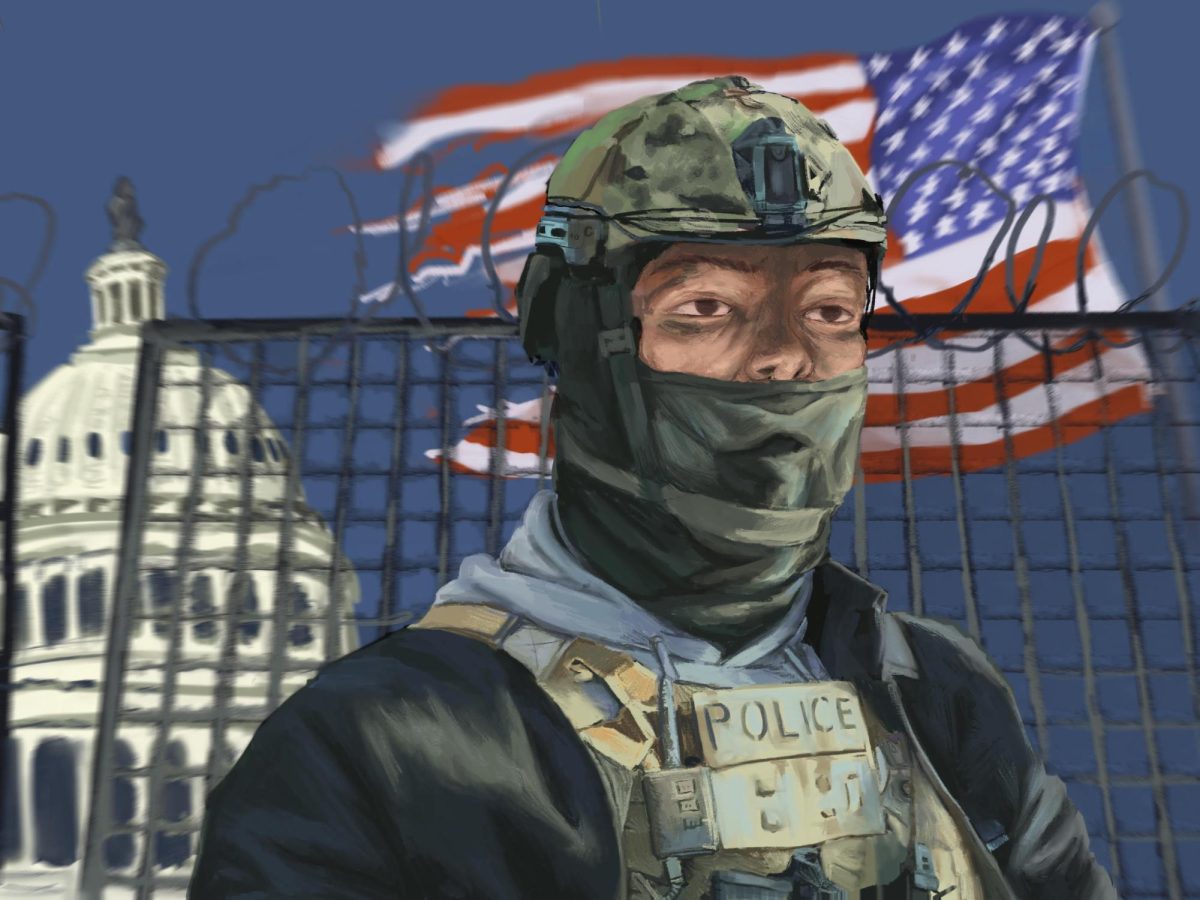
The deployments have also brought up long-standing debates over the scope of the law. For some, the expanded presence of ICE in spaces such as airports represents a concerning extension of power, as ICE agents sent to assist TSA can and have detained individuals at airports. Others say the arrests are justified because they believe ICE’s actions are necessary to uphold national security and maintain a functional society. These competing views show the polarized nature of immigration policy in the United States that has been prevalent throughout American history, often in periods of economic or political instability.
“There have been recurring moments [throughout American history] where the federal government has used its power [and] tried to identify and deport individuals who are living in the United States,” Dr. Stephens said.
Immigration law today has historical parallels to the “Mexican Repatriation” during the Great Depression, the Chinese Exclusion Act and even 1940-50s immigration policies targeting Filipinos. These events, along with many more, represent the usage of federal powers to regulate and remove populations deemed undesirable. This often occurred through the weaponization of documentation and the redefinition of immigrants’ legal status, not unlike what has happened in Congress throughout the past few years. In this sense, the current situation is not an isolated incident, but rather part of a broader historical pattern in America.
Because of sustained immigration enforcement trends, some groups emphasize the importance of civic engagement to influence future policies. “I think it’s really important for students to think about not just the stories that they’re seeing about the tactics that ICE agents are using, but also immigration law itself,” Dr. Stephens said.
The process has already started at both the state and federal levels. Proposed legislation aims to regulate how immigration enforcement occurs, including requirements for clearer identification and increased protection for detained individuals. There are many pathways for students to get involved as well, mainly through calling legislators or providing testimony on the bills they care about. People on all sides tend to agree that staying informed on current events, considering multiple perspectives and engaging in discussions about immigration policy is the best way forward.
Dr. Stephens said, “I would encourage students to pay attention, try to learn as much as they can… to think with complexity, but also to stand up for what they think the country’s immigration law should look like.” As ICE agents take on expanded roles in airports during the DHS shutdown, those actions are even more important in understanding the limits of immigration enforcement and how far federal authority should extend in public spaces.