














Democracy is built upon the idea that political opponents are to be reasoned with, not shot. Yet in a time where nearly half of Americans view members of the opposing party as “downright evil,” political disagreement in the United States has been increasingly descending into vilification, radicalization and, in some extreme cases, violence.
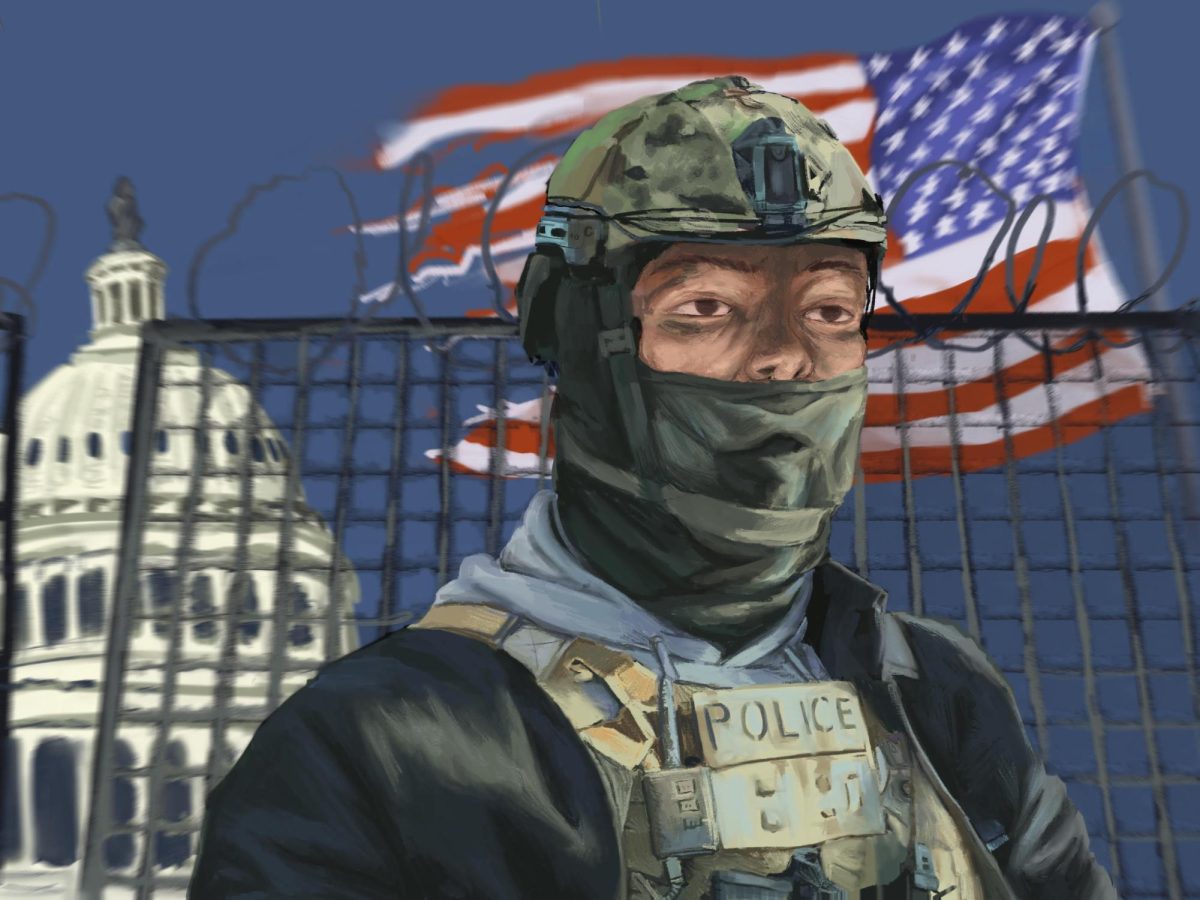
We have all heard about the cases. In the past year, there were Charlie Kirk’s assassination, Governor Josh Shapiro’s firebombing, the shootings of two Minnesota legislators and the third assassination attempt against President Donald Trump. The string of violence goes even further back: the other assassination attempts on Trump in 2024, the attack on Nancy Pelosi’s family in 2022, the January 6 attack on the Capitol in 2021 and countless other incidents.
Especially in recent years, it is incredibly hard to ignore political violence because its effects are so pervasive. Even the media coverage of such events is indicative of the current political state in America: widespread politically charged commentary often goes beyond respecting the victim’s life or the facts of the case, and articles often insinuate conspiracy theories or imply that a single act of violence is somehow representative of the flaws of the “other” 50% of Americans.
According to research, political violence is only increasing, and while exact causes are hard to determine, the trend reflects a great problem in the United States. There is more widespread political vilification, increased social exclusion and more partisan polarization than before, posing threats not only to lives but also to the fabric of democracy upon which our country rests.
Political violence is only getting more common in the United States, with numerous studies finding the percentage of threats against political officials increasing by the tune of 50%, or even 75% in just a couple of years. Americans seem to recognize this as well – 85% of respondents in a 2025 Pew Research Center survey said that political violence was increasing.
So why is this so important? At its essence, political violence is more than just physical harm; the dictionary definition distinguishes it from general crime or unrest because it. Like the name suggests, it is meant to further a political agenda by using fear or force to influence political systems. “It’s often meant to have impacts beyond simply… the harm or death of a person,” said Ms. Sarah Johnson, AP U.S. History and AP U.S. Government and Politics teacher.
Violence in politics has also inspired further party polarization, as party lines heavily divide the country in terms of opinions on political extremism. According to the 2025 Pew Research Center survey, over 70% of Republicans see left-wing extremism as a major problem in the United States, and, conversely, over 70% of Democrats see right-wing extremism as a major problem in America. In contrast, only around 30% of each party said that extremism within their own side of the political spectrum was problematic.
Additional research shows that political violence itself has also been polarized. For example, America’s Political Pulse’s political violence tracker, a nonpartisan academic project that tracked violent actions in America for over 50 years, allows viewers to filter only for acts motivated by a specific politician or party. From 1970 to 2010, only 6 incidents of this type occurred. Yet from 2010 to 2025, this statistic surged to 40, representing a more than sixfold increase in less than half the time. This shows that the growth in political polarization has gone beyond just the ballot box; party disagreements and the vilification of certain politicians have motivated people enough to try to kill certain officials, not just vote against them.
There is an additional moral dimension to politics that wasn’t as clear before. Each side views members of the other party as not just having different political views, but evil or immoral. This has made political violence more normalized and backlash less severe. In fact, in 2024, one survey conducted by Johns Hopkins University found that nearly half of Americans eligible to vote thought that members of the opposing party were “downright evil,” an alarming rate that indicates vilification permeating deep into modern political structures of the United States.
One cause could be the digitalization of media. With news outlets incentivized to prioritize user engagement, they may use strategies such as “clickbait” to further publicize existing acts of political violence and drive outrage. Social media has a similar effect; content creators are driven to spread hotter and hotter takes on political events, and at the same time, algorithms can radicalize pre-existing opinions and filter out opposing views, effectively censoring political opinions that might differ from the user’s.
“I think what’s happening through social media is that we’re not exposed as much to the diversity of perspectives and that can polarize existing perspectives,” Ms. Johnson said. “What the internet and social media has done is it’s disconnected the whole human being from the [political] perspective being presented, and therefore, you can kind of dehumanize a person’s perspective and then condemn it.” This absence of opposite perspectives and a full view of someone’s character can effectively limit people from seeing the humanity behind democracy.
Ms. Johnson said, “That is creating these warped radical ideas in people because they’re not being tempered by real life, interactions or experiences… you’re not interacting with people anymore, so that opportunity to feel connected to a diverse group of people is gone.”
Interestingly enough, along with radicalization, social media and news outlets have also simultaneously normalized violence. The digital format in which we receive news today, which is far more accessible and constantly stimulating to many Americans, has desensitized our reactions to political violence.
“We tend to assume that we live in very violent societies because most of the news that we get is about those instances of violence,” Ms. Johnson said. This effect could be a large reason why almost 16% of Americans say that violence to achieve a political goal is sometimes okay, according to one poll by Gallup; this is correlated to both age and social media usage, with heavy social media users, as well as those aged 18-29, far more likely than other groups to respond in this way. This makes sense because social media users, who are predominantly younger in age, get constantly bombarded with controversial opinions and political events.
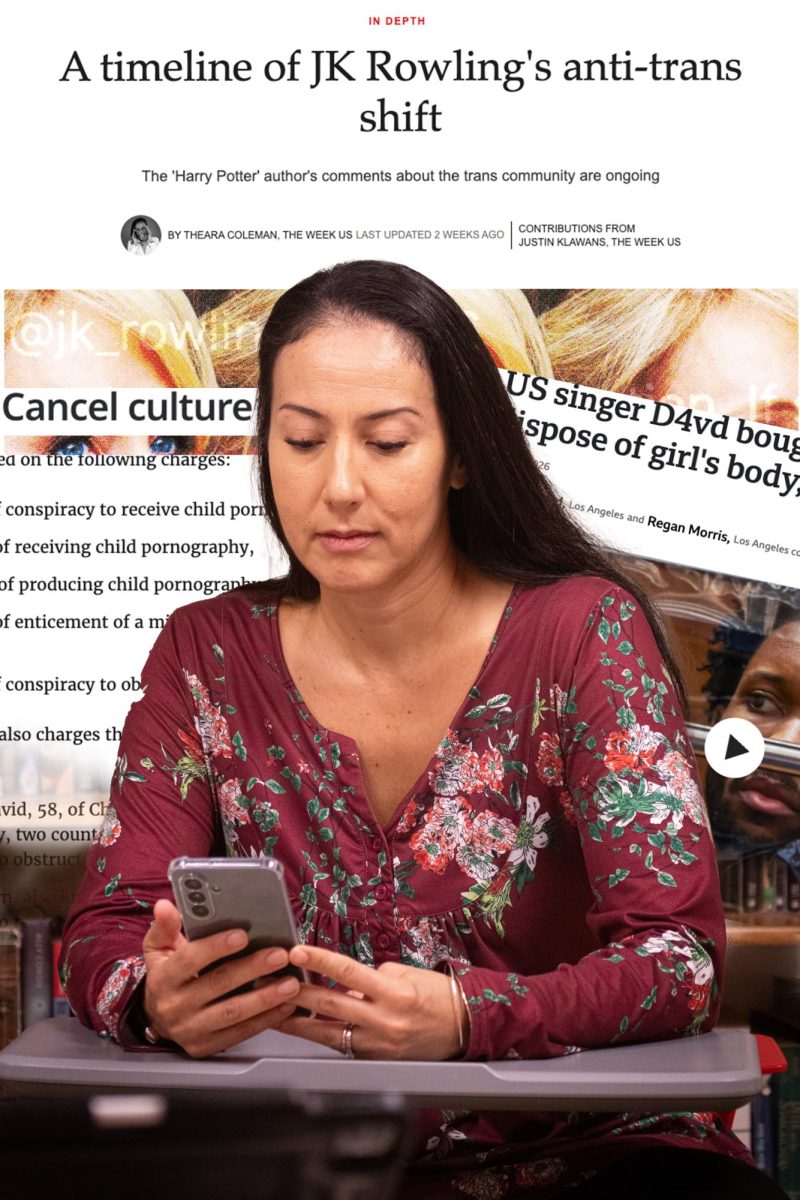
There is also a tendency on social media to turn those events into memes or humor-based content, which often boosts their exposure even further but also limits the emotional responses of viewers. As someone who regularly scrolls through short-form reels, I understand this personally. After Charlie Kirk was assassinated last September, I thought the widespread prevalence of memes making humor out of his death sickening; yet it also subconsciously worked on me, and I found myself desensitized, so much so that I was no longer shocked when I heard about the most recent attempt on President Trump’s life in May.
I find this concerning on several levels. When we don’t condone or even find political violence shocking anymore, we allow a violent political culture to develop in America. “I think a lot of good people are not going to get involved in politics because [of the] perception that it’s just too dangerous,” Ms. Johnson said.
Democracy is unique because its defining virtues tell us to treat our opponents with as much respect as we have for our allies. Demos, the ancient Greek term that gave way to the modern word, means “the people.” Our representatives are supposed to, as the term implies, represent us. So to that end, I ask, what kind of messages will be reflected back onto us when we constantly belittle and dehumanize our representatives, partisan or not?
We must not condone, celebrate, normalize or allow political violence to continue. The trend of political violence, inducing increased vilification, further party polarization and less understanding amongst Americans, will only continue if left unchecked. I believe stopping this is crucial to the continuation of democracy in the United States.
As Ms. Johnson said, “Once you have that precedent, once you have the idea that you can threaten political violence to turn an election, you’ve done real damage to our perception of democracy.”