

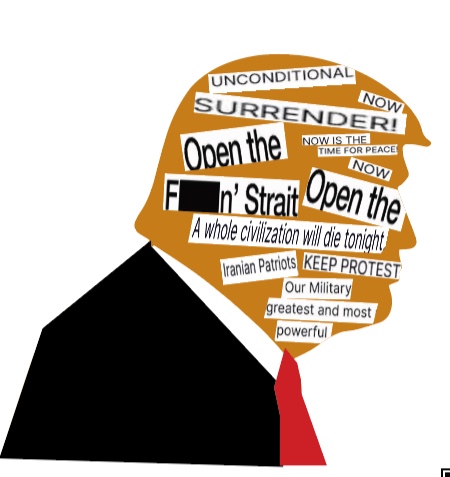




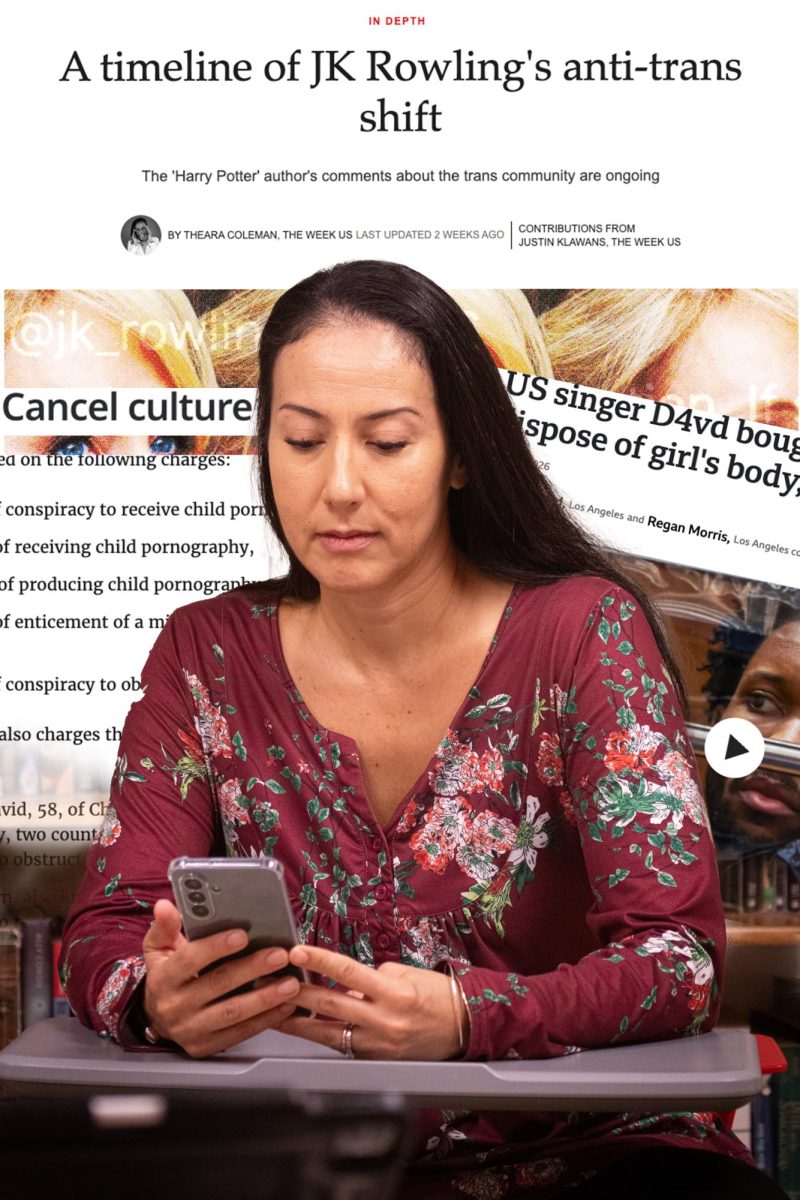








When a well known celebrity is exposed for harmful behavior, fans of said celebrity are left to question whether they should still enjoy the work of the celebrity they once loved. For example, many fans of the infamous series Harry Potter, have a hard time stomaching J.K Rowling’s derogatory anti-transgender posts on X. It sparks the difficult question of whether people can still love the series even if they disagree with J.K Rowling’s personal views.
Cancel Culture: What is it?
From musicians accused of abuse to actors criticized for making racist comments, celebrity controversies have become increasingly common through social media. Online backlash is often referred to as cancel culture. Cancel culture is where individuals or groups publicly campaign against a celebrity, organization or idea because they want to hold them accountable for offensive actions. With the help of technology, spreading awareness of an artist’s actions, no matter how big or small, have become more accessible than ever.
As the public weighs whether to separate art from the artist—meaning whether people can still enjoy or support someone’s work despite their controversial actions—opinions can vary based on personal values, the severity of an artist’s actions and the influence of social media.
‘Iolani students opinion
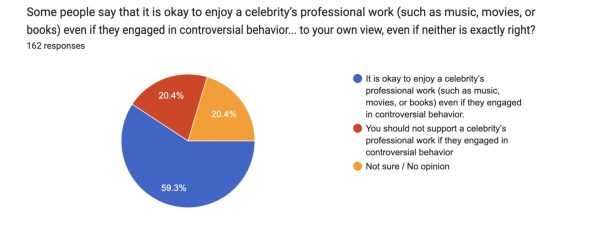
In a survey posted in the Daily Bulletin, 163 students in grades nine through 12 shared their views on whether it’s possible to separate an artist’s work from their actions. 59.3% of respondents believed it’s okay to do so. Meanwhile, 20.4% of respondents said we should not support a celebrity’s work if they engaged in controversial behavior, while another 20.4% had no opinion. People who support separating the art argue that creative work can stand out on its own, meanwhile those who disagree say that continuing to consume that work indirectly supports the creator.
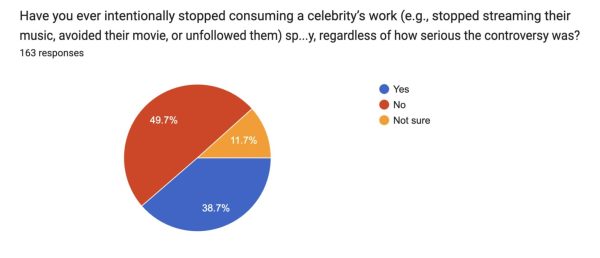
However, when students were asked if they had ever intentionally stopped consuming an artist’s work (e.g. stopped streaming their music, avoided watching their movie or unfollowed them) specifically because of a controversy, the results were more divided. About 49.7% said they had not stopped consuming an artist’s work, while 38.7% said they had. The remaining 11.7% were unsure.
These mixed responses suggest that ‘Iolani students don’t think it’s necessary to cancel an artist for their actions. But, more people have stopped consuming an artist’s work after an artist’s allegations have come out—however, this depends on a person’s personal ethics. Others put more emphasis on accountability, arguing that streaming, buying or listening to the work can still support the artists. Overall, the results of the data show that it’s less about disagreement and more about students having different morals.
Personal Values Can Shape A Person’s Opinion
The decision to separate the art comes down to personal values and where they choose to draw the line. Half of ‘Iolani students say they can separate a person’s actions from their work. Ms. Taylor Ann Katase ’13—who is the upper school band teacher—said, “I feel like there should be some separation between the person and the music, or the artists and the art.” Later, she said, “Also, everyone makes mistakes too… and unfortunately for those celebrity musicians, their lives are so public. Imagine if someone had access to every bad thing you did in your lifetime. That’s kind of what they have to go through.”
Severity of Actions Heavily Weigh In on Opinions
The severity of celebrities’ actions contributes a lot.
At ‘Iolani, this aligns with the 49.7% of students who said they would stop supporting artists depending on severity.
Ms. Yuki Basso—who is a seventh and eighth grade English teacher—said, “The line differs for everyone, and it often depends on the severity of the actions.” Additionally, she said, “I’m more likely to step back if someone’s actions are clearly harmful, ongoing and tied to their platform in a way that negatively affects others. I don’t think people should be defined solely by their worst mistakes. Human beings are complex, and even those who have done harmful things can still have contributed something meaningful or positive to society.” This is relevant in cases where the artists actions are tied to their platform, such as spreading harmful misinformation to their fans, where their influence easily impacts others.
A Yahoo poll ranking the allegations most likely to make audiences stop consuming a celebrity’s work found that sexual assault involving children ranked first, followed by extreme political views, sexual assault involving adults, racism and domestic violence.
Emotional Attachment Can Complicate Moral Ethics
Emotional attachment to art can complicate these decisions. Music, films and books can tie directly to someone’s memories and identity. Songs can make a listener feel understood, while fictional worlds can become a place to run away to.
Ms. Katase said, “I think that in general, but especially music, just because it involves emotion, it’s very personal. People can relate. I think it has a really big influence on who’s listening, who takes the song and says this really resonates with me […]
I think that’s one of the big reasons why music resonates with people and moves them in a way.”
People turn to music for belonging and comfort. This complicates the line between moral ethics and the emotional side of art.
A popular children’s author, Roald Dahl—who wrote the infamous Willy Wonka and the Chocolate Factory—has for many years faced allegations of anti-semitism, misogyny and racism. However, many people say books were their entire childhood and hold many sentimental values, making it hard to accept that he participated in actions they do not agree with. But for some people, the stories themselves feel larger than the creator behind it.
When asked about what’s the hardest part about accepting an artist you like is a bad person, Mx. Adrian Khactu said, “we want our heroes to be angels, and that sometimes isn’t the case.” Later, they added, “
All art is political. There is no neutral art. Therefore, if I really like a book, a novel, a film, a song, and I find that their creator is a horrible person, that is a very difficult process to reconcile.”
Gender: How Does It Affect Who We “Cancel”?
At the same time, social factors such as gender, race and popularity can influence how the public reacts to celebrity controversies. According to the article: Why We Cannot Separate Art from the Artist, the author says that women and marginalized groups often face harsher backlash and have a harder time regaining public trust after scandals.
In K-pop, female idols often experience stronger and longer-lasting backlash from minor controversies compared to male idols. For example, when female idols are involved in dating rumors or minor inconveniences, they can immediately face backlash that affects their public image—even if the situation is resolved.
Furthermore, social media can also intensify controversies by spreading misinformation and encouraging the public to judge before they understand the details. While some view online backlash as a form of accountability for the artist, others argue that social media can over-complicate situations
Financial Support Vs. Appreciation
For some people, there is also a distinction between emotionally appreciating an artist’s work and financially supporting them. Listening to older music or rereading a favorite book may feel different from purchasing merchandise, attending concerts or directly contributing money to the celebrity.
Mx. Khactu explained, “I find myself okay with reading the Harry Potter series, but I don’t watch the Harry Potter movies. I don’t buy Harry Potter merchandise, because I feel like that goes directly to the economic support of J.K. Rowling.”
At ‘Iolani, the survey results showed a divided student body with half of students saying they can still enjoy an artist’s work despite their controversial actions, while others prioritize accountability and choose to step back from supporting them. Interviews suggest that these decisions often depend on the severity of the controversy. While both perspectives are shown in the responses, real-world patterns of fans’ backlash and artists’ consequences suggest that making artists take accountability tends to be more important than separating the art from the artists actions.