





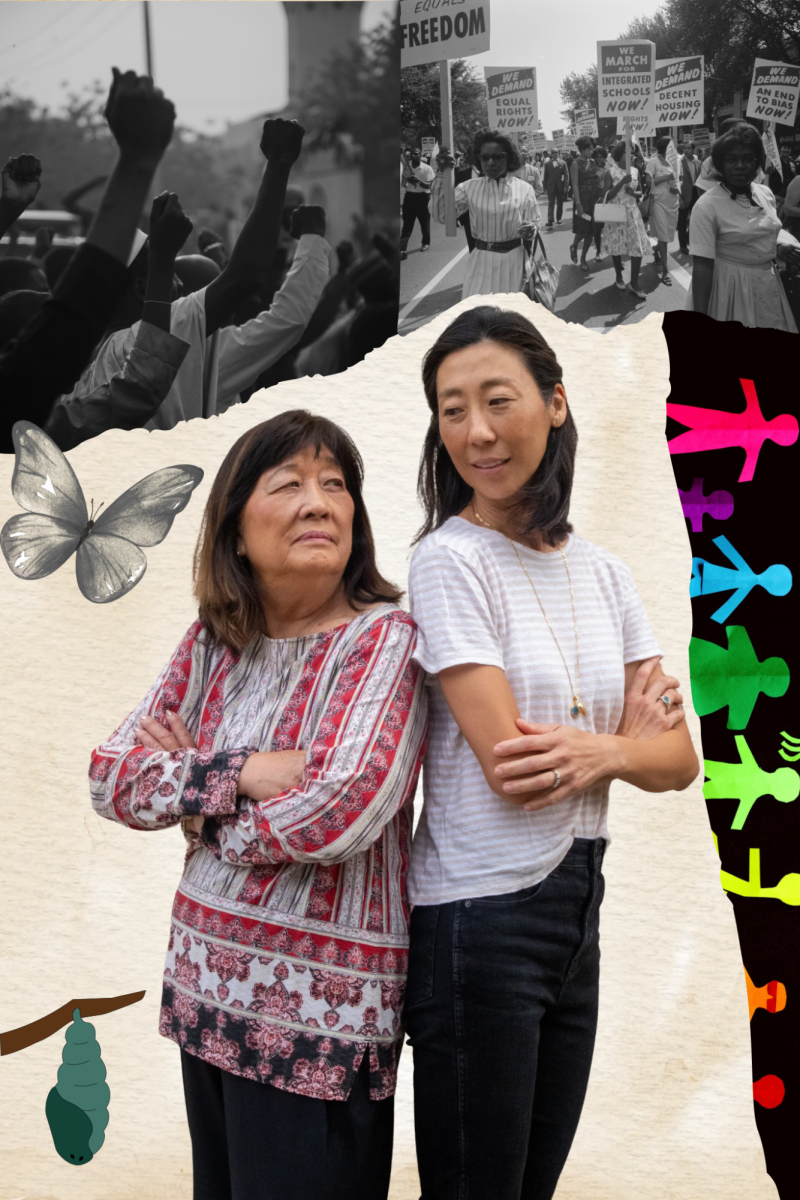















“Neither love nor terror makes one blind; indifference makes one blind.” This quote by James Baldwin, a writer and activist, challenges the norms that strong emotions are excessive and neutrality is maturity, especially in teenage settings where “nonchalance” is social currency. There is a widespread culture of downplaying serious issues with phrases such as “it’s not that deep;” responses of some students to February’s gender equality protest reflected on this. Rooted in limited understanding and the reluctance to confront discomfort, this dismissiveness shuts down discourse essential for learning, growing and serving justice. To move forward, we need more courage to be uncomfortable: to face and acknowledge mistakes and issues.
“It’s Not That Deep” — Really?
Recent turbulence at school showed the dismissive behavior clearly. In response to the demeaning gender-related student misconduct, the student-led walkout for gender equality and various listening sessions, some students remained indifferent despite widespread concern.
Natalie C. ’29 heard, “Why do they care so much? It’s not that deep. It’s a joke.” She added how it is problematic that “these things are normalized [to] be seen as just a joke.”
Irene C. ’28 said, “I see a lot of [students] saying it’s not that deep, [though] they don’t stand in the shoes of [victims],” lacking empathy.
This avoidance reflects on a broader pattern: 56% of Americans have stopped talking about political news, the major cause being the “concern to make things uncomfortable”; an equal portion of teachers in schools have never brought up political issues due to the fear of others’ reactions and consequences.
Causes
One reason for this is a lack of perceived proximity and urgency. Health and Wellness Educator Mrs. Molly Takagi shared, “[Understanding] how [an issue] can do harm to the entire community, not just the targets,” would make more students engaged. It is difficult to fathom the full harm done as an observer; as Irene said, “it’s almost cruel to say it’s not that deep [when you weren’t directly harmed].”
However, perhaps there is a deeper universal fear behind this: the reluctance to face discomfort. Mrs. Takagi acknowledged, “We tend to be taught… that we should avoid uncomfortable conversations.” Open discourse requires vulnerability — the courage to accept mistakes and consequences, to take accountability, to say “sorry.” When the want for comfort and silence overrides the need for facts and justice, groups may avoid the tension through downplaying issues.
Social pressure not to stay too engaged — to stay “cool” — reinforces this. Teenagers, even those civically engaged, feel the pressure to belong. In our community, Irene observed, “a nonchalant culture of not caring: … hyper-tunnel vision, [focusing] on yourself” is an “extremely cruel and careless culture that is dangerous to spread.”
All together, it becomes tempting to simply sweep problems under the rug. Some take on the shield that it is too exhausting or risky to discuss controversy, yet the underlying reasons are often in personal fear of facing truths. And if peace is acquired through silencing problems, that is at the cost of layers of ongoing issues in the community.
The Cost of Dismissal
Though indifference may seem harmless, it unknowingly hinders growth and undermines community. The impact is threefold: first, the problems persist. We say mistakes are there to learn, but how can we learn from something we choose to ignore? Further, it fosters a culture of dismissing other harms. When students hesitate to discuss it, as Mrs. Takagi shared, “We’re missing a huge opportunity to improve our community standards [that relate] to other issues that we might [also] be avoiding.” Refusing to tackle them results in, as Irene said, “a culture of under-caring for victims and providing a coat of protection over perpetrators, allowing them to not take accountability. We’re choosing to look over facts and situations that make people uncomfortable.” Lastly, it undermines the mutual trust as a community — that issues will be dealt with seriousness and respect. As Natalie heard her peers understating the issue, she felt “not seen in our community” where immediate issues affecting her peers would be brushed aside.
Looking Forward
Yes, misdeeds happen. And yes, they are embarrassing. But what tells us even more about events themselves is our response to it — whether we decide to get to the bottom of it, or refuse to look into its depths.
On the lines of this particular event, a big portion of our community has courageously stood up for themselves — and others — through open discussion. Yet, it is also true that a few too many students have heard “it was a joke,” “forgive, don’t forget” and “they’re being dramatic.”
There is a need to be better informed, then to deliberate on an event rather than habitually brushing it off. “Being able to normalize that this might be an uncomfortable conversation,” yet still striving for it, and purposely creating spaces for such, as Mrs. Takagi phrased it, is crucial.
Discomfort is not a threat to peace, but a necessary step towards it. Respect and disagreements are not mutually exclusive; organized, deliberate settings for sharing conflicting opinions constructively can foster growth–in fact, that very clash is what makes discourse meaningful. Only when we recognize this can real progress and discourse take place.