















A special episode of the Imua ‘Iolani podcast. Listen to the episode above or on Spotify.
Episode Transcript:
Madeline: Hey Josh, what comes after 6?
Joshua: 7…
Yumi: SIX SEVEN!
Madeline: Language moves fast but nothing captures the pulse of a generation quite like slang. In this episode, called Something Lit: Analyzing the Slays and Nays of Slang. My name is Madeline
Joshua: My name is Joshua.
Yumi: My name is Yumi.
Madeline: And we are seniors at ‘Iolani school and members of our school newsroom, Imua ‘Iolani. And today, we will first explore the evolution of everyday expressions from around the last 50 years.
Yumi: Next, By tracing what was once “cool,” “lit,” or even “savage” to what’s trending today, we plan to explore how slang both shapes and reflects culture.
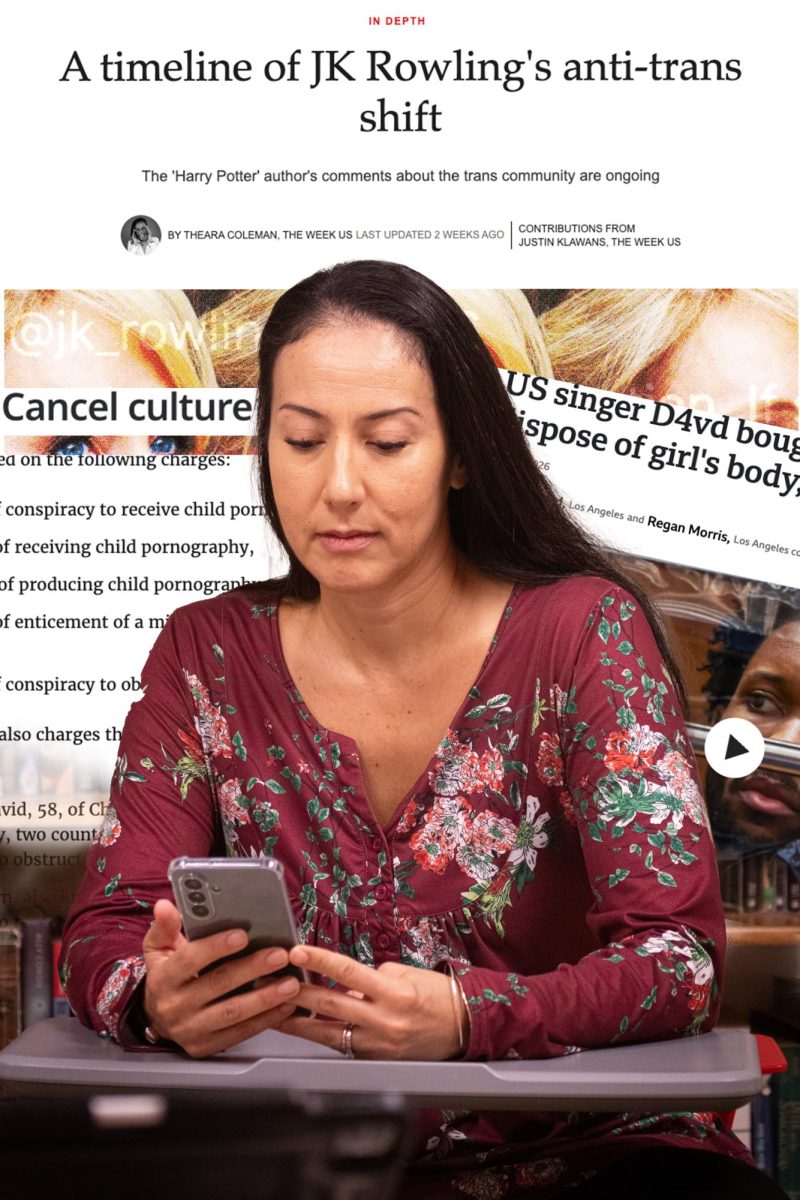
Joshua: Lastly, drawing from Imua’s past coverage on these viral trends, including the “AAVE Evolution: The Evolution of the English Language and the Roots of Slang” article published in Volume 99, Issue II or our viral slang reel posted last May, we examine why certain phrases stick while others fade into nostalgia. Since these are some of Imua’s most viewed topics, we decided to take a deeper look into it!
Joshua: But first, what even is slang?
Madeline: According to the Merriam-Webster dictionary, slang is “language peculiar to a particular group” or “an informal nonstandard vocabulary composed typically of coinages, arbitrarily changed words, and extravagant, forced or facetious (fah-see-cious) figures of speech.”
Joshua: Woah
Madeline: I know that was probably confusing, but in simple words, it is playful, informal speech used by specific groups of people.
Yumi: For example, words like “slay,” “lowkey” and “ate” are examples of slang that we use today. If this all sounds like nonsense to you we’ll explain what they mean later! But first, let’s share the slang we used in elementary school and now! For context, we will go around and say a couple words or phrases that we used, a brief definition and use it in a sentence.
Joshua: Yeah! Sounds like fun! Who wants to go first?
Madeline: I’ll go first. For me, I loved using these words: lit, salty and savage. Lit means amazing or exciting, like that party was littt… Salty means being bitter and upset about something… for instance, let’s say Sarah was salty about how she didn’t get the extra credit point or Michael was salty about how they lost at match point.
Madeline: Lastly, I admit my most common word during the good ol’ days (like sixth or seventh grade haha), was savage meaning someone acting in a ruthless or bold manner. Ohhh.. She had a clapback.. She’s savage. I swear I even had a sweatshirt that said savage. I remember just popcorning off of my friends who learned it from gacha life, musically and vine.
Yumi: For me, I grew up watching a lot of video gaming youtubers, so I remember everyone using “YOLO,” “get rekt,” and “MLG!” in epic gaming compilations. “YOLO” stands for “you only live once” and “MLG” is an acronym for “Major league gaming.” When I was a kid, I remember running with my friends on the playground doing “insane extra extreme parkour” and yelling “YOLO!” every time we’d do a crazy move (crazy move being jumping off the end of the small slide).
Yumi: Josh, take it away!
Joshua: But I’m still thinking
Yumi: Just YOLO it!
Joshua: I personally used yeet a lot. I have no idea where it came from but I would say it whenever I threw something. To be honest, I still catch myself saying it today! Like I would tell someone to “just yeet it over” or say that “I yeeted it over there.”
Joshua: That was a lot of fun, it’s funny how we use new phrases or words like 6-7 instead of those words now, but where does the slang we use today even come from?
Madeline: Today, slang mostly spreads through viral social media trends and word-of-mouth.
Yumi: In the case of 6-7, It was started by a rapper that goes by the name Skrilla who repeatedly used the phrase in his 2024 song “doot doot.”
Joshua: Haha doot doot.
Madeline: It was memorable enough that listeners soundclipped the phrase and posted it out-of-context online.
Joshua: Oh really? I thought it was started by a kid at a basketball game? I saw many pictures of him online when referring to “6-7.”
Madeline: Yeah, there was a popular TikTok video featuring a kid yelling “6-7” into the camera while cheering at a basketball game. A lot of people reposted screenshots from that video whenever a 6-7 reference came up, so if you open the comment section of a 6-7 tiktok video, chances are you’ll see it.
Joshua: Wow that was super interesting, I had NO clue where that trend came from. But, what does it even mean? Does not knowing make me unc?
Yumi: Yeah you unc…
Joshua: UNC! Who are you calling Unc, unc?
Madeline: 6-7 is one of many examples of how slang can give meanings to words or phrases that don’t carry that meaning literally. Furthermore, it can also cause other words to evolve and take on new meanings it didn’t have before. This is called semantic progress which is a form of language change regarding the evolution of word usage— usually to the point that the modern meaning is radically different from the original usage. From time to time, semantic progress can lead to broadening the word’s meaning but can also lead to the definition getting more narrow.
Yumi: Yes! This phenomenon isn’t just limited to 6-7 however, it also appears with many other words we use today too. For example, take my personal favorite word “cooked.” Although originally it is the past-tense form of the verb “to cook,” when used colloquially today, it means to be swamped or screwed.
Joshua: Yeah, for example, I have a math test next period and I’m cooked!
Joshua: But wait… but I thought that “cooked” means to do well on something. For example, I always say that I “cooked on that essay” or that “she cooked with that art piece.” Am I using it wrong?
Madeline: No not at all! In fact, the meaning of the word “cooked” changes with the context that you use it in. Interesting right?
Joshua: Wow, that is interesting!
Madeline: Although slang is mostly considered light-hearted and superficial, in reality, it can inform us of the history and identities of certain communities in ways that often goes unnoticed or unacknowledged. For example, the phrase “clock it” is generally thought of as something that recently went viral and spread through social media, but did you know it has deeper roots?
Joshua: No I did not! Tell us more!
Madeline: Well, it was actually coined in the 1960s by the Black and Latinx queer community in New York City’s ballroom scene. Today, “clock it” means to call something out or to notice something, and in the past the phrase generally carried the same definition, but was used in a very different context. The ballroom scene was a safe space for queer people of color for self-expression, creative freedom and performance. Whenever someone used “clock it” in the ballroom, it often meant knowing someone’s sexuality or gender.
Joshua: I didn’t know that! Are there any other words like it?
Yumi: Actually, there is a trend of mainstream media adopting words from the Black and Brown queer community. Do you know the words “tea” and “it’s giving”?
Joshua: Yeah I do! I hear people using that all the time!
Yumi: Those words came from the community as well! A lot of people use these words without realizing where they came from originally.
Joshua: But, if “clock it” was coined so long ago, how is it that it’s just now going viral on social media?
Yumi: By TV shows! According to a LGBTQ+ journalism organization named “Them,” one example of a TV show that popularized the phrase was the ballroom competition show “Legendary,” where ballroom icon Leiomy Maldonado (lay oh me – maldo nah do) frequently used it while finger clapping. Most recently, contestants on the dating show Love Island USA, which had 18 billion minutes viewed during their last season that aired last summer, often used the phrase when referring to calling someone out. This all contributed to the spreading of the term today.
Joshua: That was really eye-opening, slang has the possibility to expand beyond the community that created it, and be a part of the vocabularies of other communities. But that raises another question: What determines whether or not a certain word sticks, or disappears? And is it possible for words originally considered “slang” to be so prominent, it turns into an actual definition in the dictionary?
Yumi: Yeah, I’ve always wondered how some words die out after a couple of months, but others really stick around.
Madeline: According to Britannica and American University, people stop saying slang for numerous reasons.
- It becomes outdated as slang is deeply tied to specific eras and, like fashion, falls out of style. Older slang like groovy from the 1960s eventually sounds cringe or forced, particularly when used by older generations.
- Loss of exclusivity. Slang is often used to create in-group identity. When a term becomes too popular, widely understood, or used by older generations, it loses its “insider” appeal and is abandoned for newer, fresher terms.
- Lastly, contextual professionalism. Slang, for the most part, is often viewed as too informal or unprofessional. Many people consciously stop using it in the workplace, during job interviews, or in professional correspondence to be taken seriously. This is why some adults may stop using slang in order to maintain a more mature image.
Yumi: Sometimes slang becomes so common that it stops being considered slang and becomes part of the standard, everyday lexicon, such as “cool” (used since the mid-18th century) or “mad” (meaning “angry”) and more recently “rizz,” which is short for charisma and the Oxford University Press word of the year, rage bait.
Joshua: Lalalalalala!
Yumi: Hey, stop ragebating me!
Madeline: According to Cambridge University, dictionary editors observe which words people look up on the website. If there is a word that is constantly being looked up, but doesn’t already have an entry, there is a possibility that it might be added. One example of this is the slang word “skibidi” which was added to the dictionary in 2025 after going viral on social media. Additionally, they also search publications and media channels for emerging terms.
Joshua: But… If slang spreads mostly today on social media, I’m wondering how it spread before it.
Yumi: Slang spreads through many channels, such as popular songs, plays, conversations, which, for the initiated, are often rich in double entendre. When subcultures are structurally tight, little of their language leaks out. Thus even the Mafia, in more than a half-century of powerful criminal activity in America, has contributed little slang.
Joshua: A couple months back Imua did a reel featuring teachers trying to guess commonly used slang words.. To this day, this is our most popular reel and for good reason. Let’s listen!
Madeline: We also interviewed various members of the ‘Iolani community to get their opinion and perspective on slang!
Yumi: It’s not just us that are brainrotted… Okay now, we’re running short for time, so want to conclude by playing another game
Joshua: Sure!
Yumi: OK! I’ll say a word and you guys say whether it’s “tea” or if it’s “cooked”
Madeline: Got it!
Yumi: Ok, first savage.
Madeline: TEAAA
Yumi: Haha, second aura.
Joshua: TEA
Yumi: Ok, last one, slay..
Madeline: TEAA.
Yumi: Wait, one more: skibidi.
Madeline: Oh, cooked!
Joshua: Cooked!