













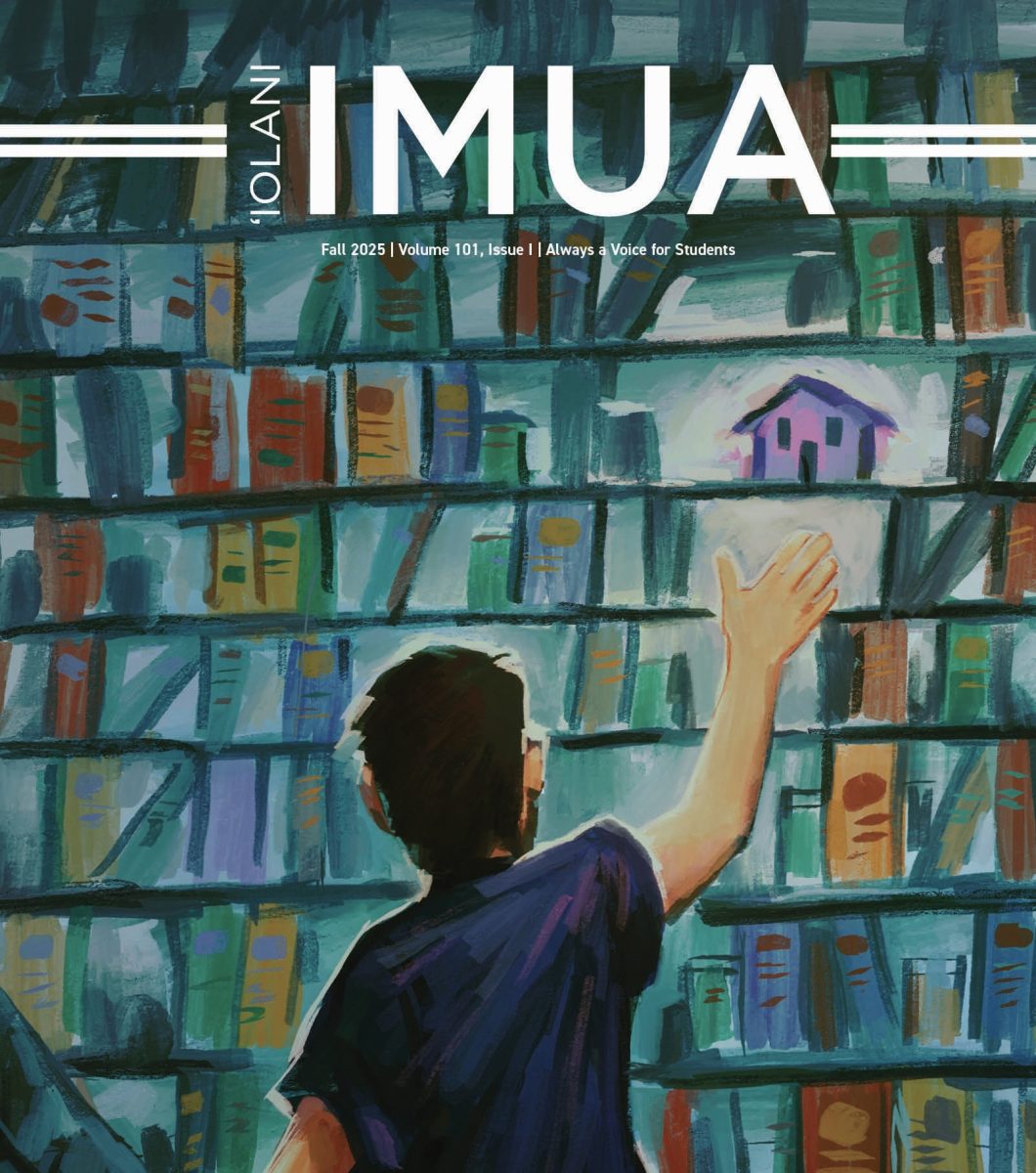



On Sept. 1, 2025, the state of Texas passed Senate Bill 13, shifting greater control over public library collections from professional librarians to elected school boards. The law is part of a broader wave of conservative efforts across the United States to reshape school curricula and restrict access to books addressing topics such as LGBTQ+ or racial themes. Following this trend, librarians have reported death threats and violent intimidation from individuals opposed to their defense of access to those books. During Banned Books Week in December 2025, ‘Iolani School Library created a display where selected titles were wrapped in paper so their titles were hidden, and only themes of each book were listed outside. Students were encouraged to choose a book based solely on those themes, revealing the title only after checking it out. The display served as a tribute to historically challenged books, highlighting titles ranging from classics once considered controversial to more modern works being reevaluated. Despite the Hawai‘i State Public Library System as well as the librarians at ‘Iolani School making sure their core mission remains unchanged, the country is at a crossroads in the fight over access to information. Libraries are no longer just places for study – they are the frontline institution of the ongoing fight against censorship, tasked with providing accurate and representative collections that reflect the diversity of society and preserving intellectual freedom.
A Growing Polarized Climate For Information
Recent legislation reflects a broader national trend in polarizing ideas, where book challenges are no longer confined to parental concerns about the age-appropriateness of a certain book. Instead, challenges increasingly align with partisan platforms and national advocacy campaigns in seeking to regulate how topics such as race, gender, and sexuality are framed in public institutions. These laws represent a shift toward criminalizing professional judgment and weaponizing censorship.
“And so in recent years, things have gotten really challenging,” said Ms. Georgina Tom, Director of Library Services at ‘Iolani School. Reacting to the broader climate in the United States and the experiences reported by librarians nationwide, Ms. Tom said, “There have been so many challenges to the book titles. We’ve seen different pressure campaigns. Librarians have been threatened.” Ms. Tom also emphasized that intimidation does not come solely from political leaders. “That harassment is also coming from patrons,” she said, describing an atmosphere that has become “extremely alarming for anyone in the field.”
Stacey Aldrich, Hawai‘i State Librarian, framed the issue as larger than individual books removed from shelves. “Banning books is only one part of a bigger theme, which is our freedom of speech and freedom to read,” she said. “There are journalists who are not being published right now. We recently saw journalists’ homes searched for information. There are authors who are not being published because of the stories that they want to tell. Banned books are a part of it. It’s all thematic.” In that sense, book disputes come as a proxy for larger ideological divisions. As political discourse grows more polarized, libraries are dragged in debates over which perspectives should be allowed in public collection.
Professional Standards in Librarianship
Despite broader accusations that librarians and library collections can reflect ideological bias, both Ms. Tom and Ms. Aldrich emphasized that book selections are governed by formal, transparent and nationally recognized standards. Decisions about what remains on bookshelves are not made by individuals but through a structured review process designed to ensure justice, relevance, and accuracy.
“Librarianship is a profession that has standards, it has guidelines, it has ethics, and it is a minimum of one master’s degree, in which we get trained in how to select titles in addition to how to research and how to teach research,” Ms. Tom said. At ‘Iolani, she explained, collection development is intentional, as librarians try to provide books that represent the student body, as well as bringing in books that extend the students’ experiences. Selections are also not arbitrary. “There was a whole thought process that went behind selecting a particular title,” she said. Librarians actively monitor new releases, consult professional reviews and evaluate recommendations by literary organizations. During this process, Ms. Tom and her team make sure that the collections are dynamic, relevant and match the current needs of the school.
Ms. Aldrich echoed this structured approach at the state level. The public library system follows a formal collection development policy aligned with national standards. Librarians do research to ensure that they meet several criteria, including relevance to community needs, suitability for the intended audience, cost, and attention by critics and reviewers. The HSPLS (Hawaii State Public Library System) Collection Development Policy provides details on how materials are selected. When concerns arise, libraries follow formal review procedures. Ms. Tom explained that if someone objects to a title, they must submit a written request, which is followed by a step-by-step review process put together by librarians across nations with a defined timeline and criteria that she and her team use. The process is available to everyone.
When Books are Challenged
Unlike Texas, Hawai‘i has no law comparable to Senate Bill 13 restricting what may be placed on shelves. “A few of our libraries have had patrons who have expressed concerns over books in the collection, and they are always referred to the HSPLS Collection Development Policy and Patron Request for Reevaluation of Library Materials form,” Ms. Aldrich said. Hawai‘i has not experienced the intense level of banning books like libraries in the continental U.S.
The statewide system spanning 51 branches across six islands allows for shared access. “If you live in Maui and they don’t have any of the books that you want to read, you can order the book from another library branch on any island and have it delivered to you,” Ms. Aldrich said. “So everyone has access to the entire HSPLS collection.”
Still, national debates affect local perception. Even as scrutiny and political pressures are amplified, librarians at ‘Iolani as well as the State of Hawai‘i maintain that the very foundational values of librarianship remain unchanged. Regardless of shifting political climates, the goal of librarians in maintaining accessibility, representation and intellectual freedoms is their core goal. “There hasn’t been a change in librarianship and library values,” Ms. Tom said. “What has changed is the challenges towards the ways in which external parties want to come in and try to limit what we’re already doing.” To reinforce that mission, ‘Iolani librarians recently marked Banned Books Week with a display highlighting titles historically challenged, from classics once considered controversial to more modern works being reevaluated.
For Ms. Aldrich, the stakes are democratic. “When democracies start to fall, the first thing governments do is they take away access to books, information and our collective stories.” Reading, she argues, builds empathy. “When you’re reading a book, you’re stepping into other people’s shoes, you’re seeing a different life and you can understand people in a new way.”
She extends that idea even further. “I feel like the success of an individual is supported by being able to read different stories, and I think stories are also medicine, because if you find the right story, it might heal a part of you.” For some readers, especially those from marginalized communities, representation in books affirms identity and belonging. For others, unfamiliar narratives challenge assumptions and expand worldviews. In either case, the library’s role is to sustain this expansion, not to dictate why some books do or do not matter, but to ensure equal access to all of them.
When in Doubt, Advocate and Read
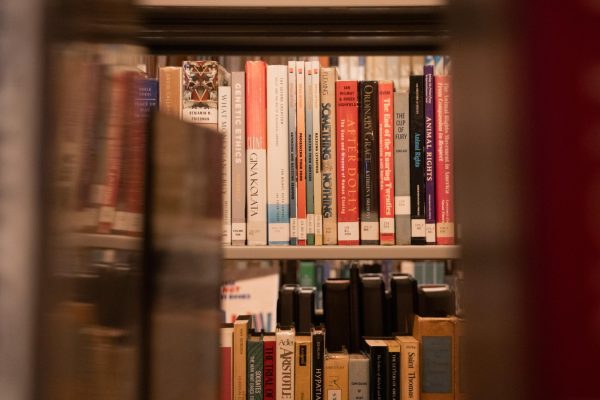
As book challenges grow, advocacy organizations have become vital defenders of intellectual freedom in offering resources. Groups such as PEN America, National Coalition Against Censorship, Foundation for Individual Rights and Expression, and EveryLibrary provide legal analysis, public reports and policy assistance related to intellectual freedom. Ms. Tom suggested that individual engagement remains foundational. She encouraged students to speak with legislators, attend school board meetings and more importantly, evaluate sources critically. The best approach is “informing yourself about what’s happening and why, […] trying to draw conclusions for yourself and really evaluating the source, and identifying a narrative and [determine] what kind of bias is in this reasoning,” she said.
“The freedom to read is for everyone,” Ms. Aldrich said. Policies are designed not around agreement with content or the profoundness of the substance, but around the protection of access. Beyond managing shelves, librarians serve as stewards of access, of maintaining the conditions under which democratic ideologies remain possible.